
Gyms are high-energy spaces, but they’re also enclosed, noisy and heavily used for long hours each day. Well-chosen indoor plants for gym environments can make a noticeable difference, helping improve air quality, soften acoustics and create a space that feels healthier to train in. Plants also help manage heat and humidity, which matters more than people realise in busy fitness facilities.The tricky part is choosing plants that cope with gym conditions, especially small indoor plants for gym spaces where floor area and circulation are tight. Heat, moisture and foot traffic rule out plenty of indoor favourites, so plant selection needs to be realistic.
Hardy Plants
In gyms, plants need to cope without much intervention. They’re often placed close to equipment or walkways, brushed past throughout the day and exposed to changing conditions as the space heats up and cools down. Once a gym starts operating, there’s usually a limited scope to adjust conditions just to suit the plants.
Many of the best indoor plants for gyms suit these spaces because they tolerate inconsistency. They manage variable light, don’t react badly to missed watering and stay contained rather than spreading into circulation areas. These qualities make them a practical choice for fitness centres, particularly in high-use zones where plants need to remain presentable without frequent adjustment.
Snake Plant (Sansevieria)
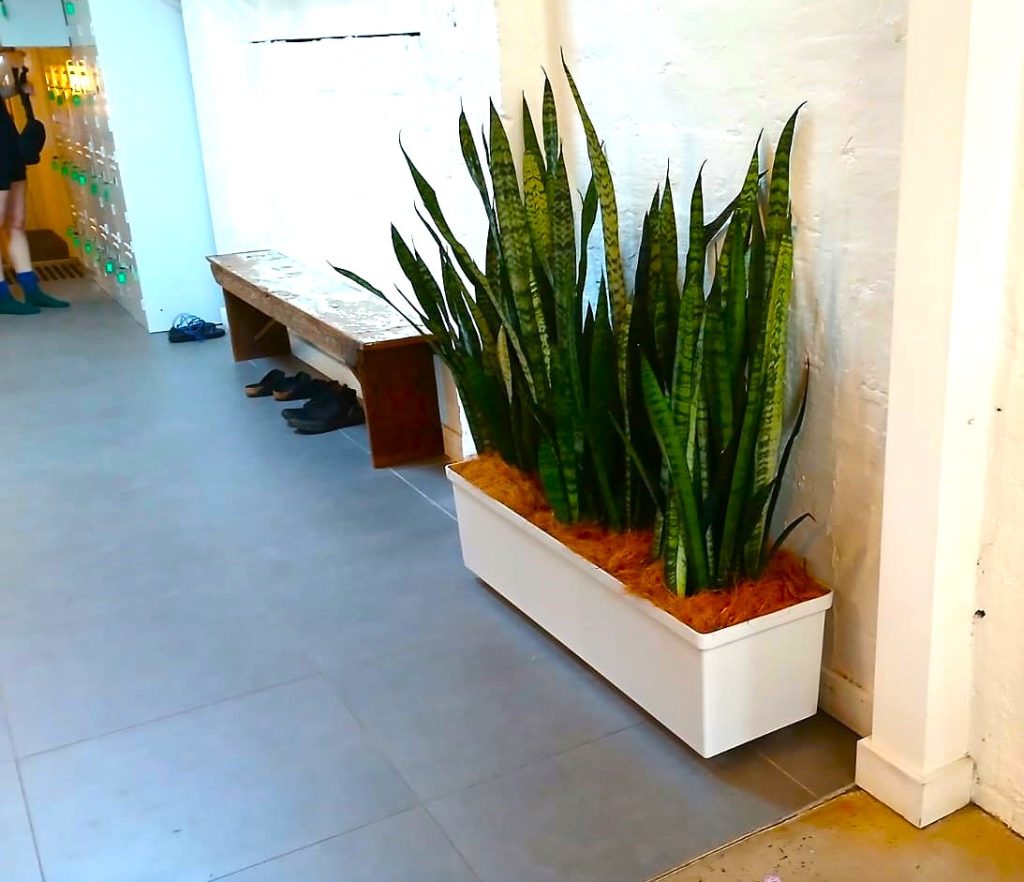
Snake Plants are a common sight in gyms because they’re hard to knock out of shape. They cope well with low light, temperature changes and irregular watering, all of which are pretty normal in fitness facilities. Their upright growth also means they stay narrow rather than spreading, which matters in busy spaces.
They’re usually placed along walls, beside fixed equipment or through circulation areas where floor space is limited. Because they grow vertically, they don’t creep into walkways or interfere with how the space is used.
Snake Plants prefer free-draining soil and don’t need frequent watering. Letting the soil dry between waterings suits them better than trying to keep it consistently moist.
Happy Plant (Dracaena fragrans)
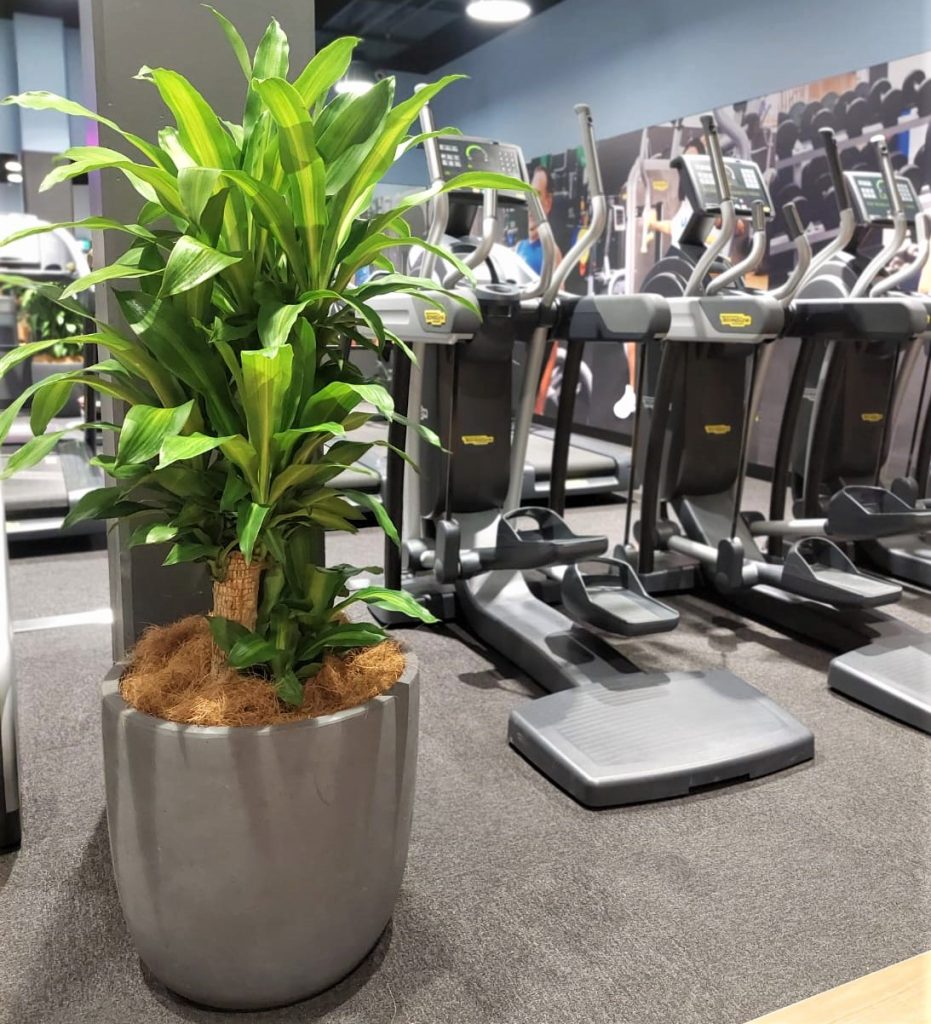
Happy Plants are often used in gyms because they adapt well to indoor conditions and hold their structure over time. They tolerate moderate to low light and don’t react quickly to minor shifts in temperature or watering, which suits long operating hours.
They’re typically placed in corridors, reception areas or along the edges of training zones where height is needed without excessive spread. Their upright growth keeps floor space clear.
Happy Plants grow best in well-drained soil and do best with moderate watering. Allow the top layer to dry slightly between waterings.
Rubber Plant (Ficus elastica)
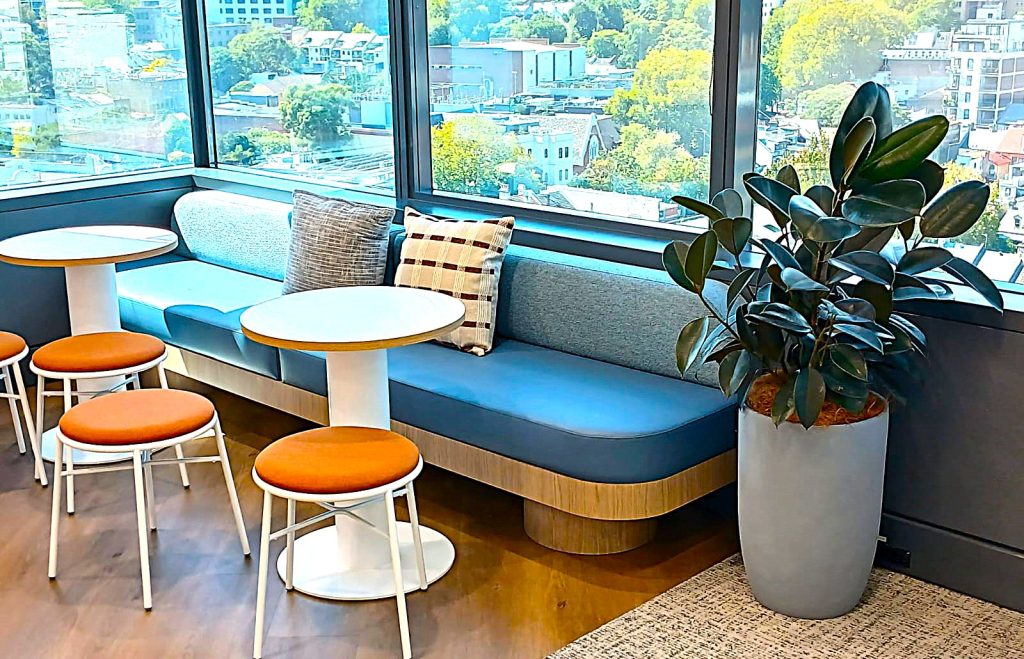
Rubber Plants are typically specified in gyms where a larger plant is needed to anchor open spaces. Their broad leaves add visual weight and work well in high-ceiling areas or expansive training floors.
They perform best in bright, indirect light but are more tolerant than many feature plants once established. Because of their size, they’re usually positioned away from heavy traffic so they don’t interfere with movement or equipment use.
Rubber Plants prefer free-draining soil and consistent watering. Allow the top layer of soil to dry before watering again.
Air Purifiers
Air quality comes up quickly in gym design, especially in enclosed training areas where people are breathing hard for long periods. While plants aren’t a substitute for mechanical ventilation, some species are commonly used because they contribute to cleaner indoor air and help soften spaces that would otherwise feel sealed off.
In gyms, these plants tend to work best when they’re paired with species that can also cope with heat and humidity. For designers, they’re often used in quieter zones, recovery areas or around the perimeter of training spaces rather than directly beside equipment. Many of the best indoor plants for gyms listed below are also included among widely recognised air-purifying plants used in commercial interiors.
Spider Plant (Chlorophytum comosum)
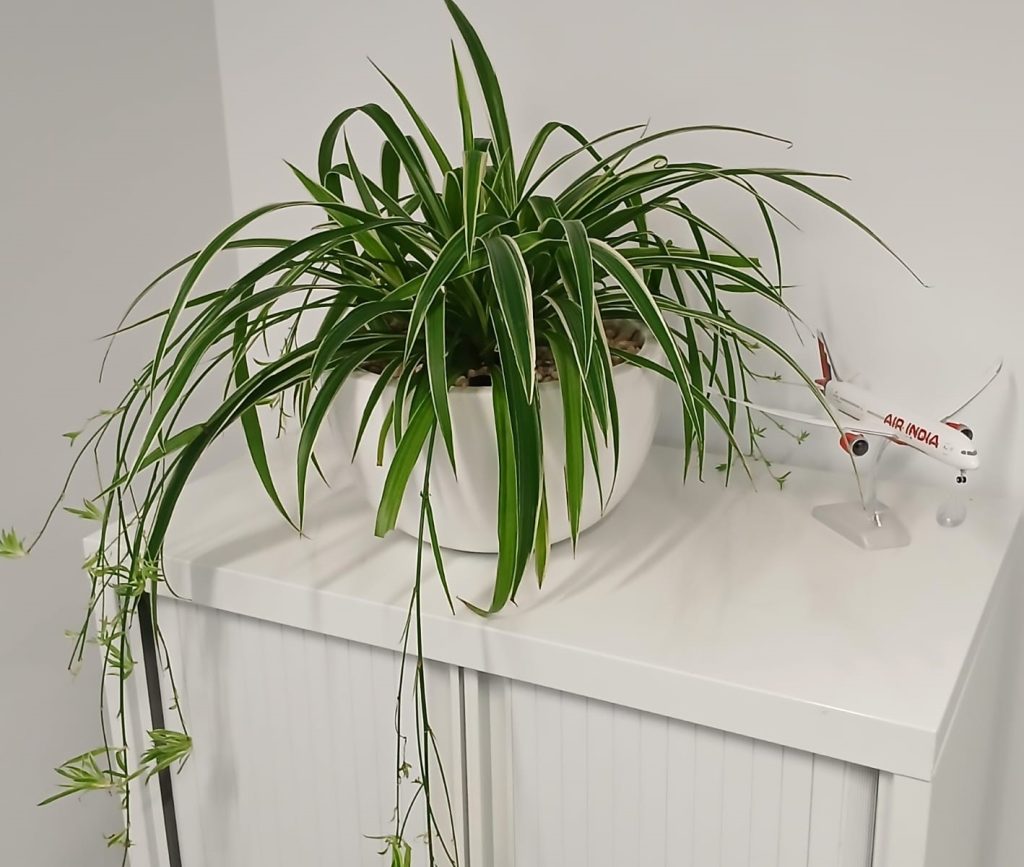
Spider Plants are often used in gyms because they adapt easily to indoor conditions and tolerate humidity better than many common houseplants. They thrive well with indirect light and recover quickly if conditions fluctuate, which makes them a practical choice for fitness facilities.
They’re usually positioned on shelves, ledges or in hanging planters, particularly in stretching zones or near windows where light is more consistent. Their trailing growth works best when kept clear of circulation paths.
This plant requires well-drained soil and regular watering. The soil should be allowed to dry slightly between watering to avoid excess moisture building up.
Peace Lily (Spathiphyllum)
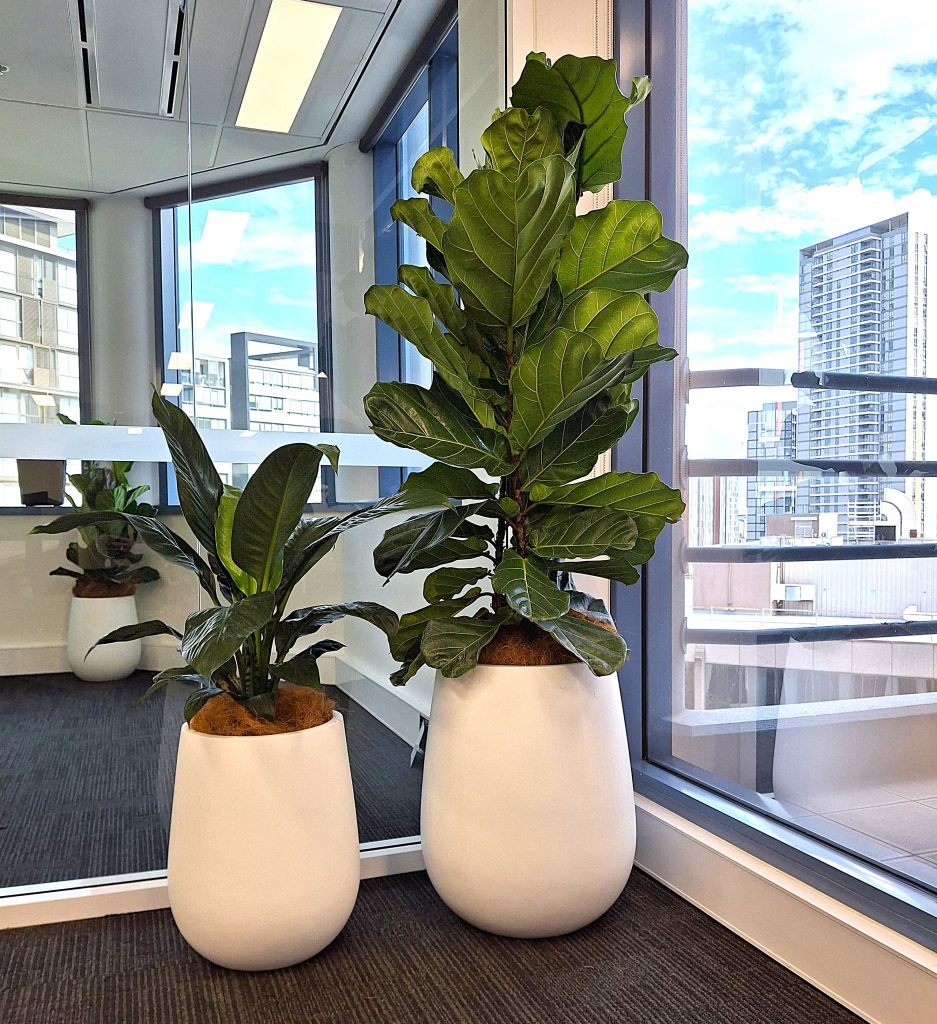
Peace Lilies are typically used in gyms where a calmer atmosphere is needed, such as yoga studios, recovery spaces or staff areas. They’re known for tolerating lower light and higher humidity, which suits many indoor fitness environments.
They’re best placed away from heavy traffic, often along walls or in quieter corners where their softer foliage won’t be constantly brushed past. Because they respond visibly to dry soil, they’re useful in areas where watering is monitored more closely.
Peace Lilies prefer evenly moist soil and good drainage. They’re less tolerant of drying out than some other indoor plants for gym interiors.
English Ivy (Hedera helix)
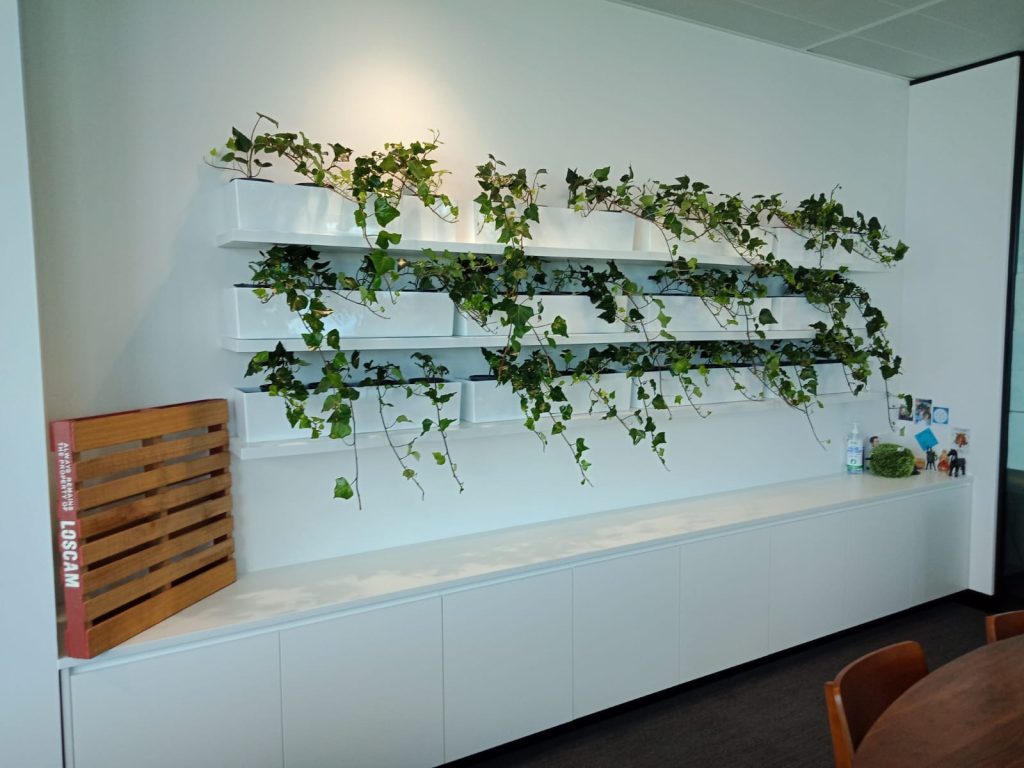
English Ivy is used in gyms primarily as a trailing plant that helps soften hard architectural lines. It performs best in controlled indoor environments with indirect light and steady airflow.
It’s commonly placed in elevated planters, on shelving or trained along walls, where it can grow without interfering with movement. This makes it suitable for perimeter zones rather than central training areas.
English Ivy thrives on well-drained soil and consistent, light watering. Allow the top layer of soil to dry slightly between watering.
Low-Light Friendly
Many fitness centres are located in converted buildings, basements or interior tenancies where lighting is designed for training, not plant growth. In these areas, plant choice needs to be grounded from the start.
Low-light indoor plants are often used because they maintain density and colour under artificial lighting. They’re also easier to manage long term, particularly when plant presentation is supported by a professional maintenance service, where plants may be rotated or replaced regularly to keep the space consistent.
Pothos (Epipremnum aureum)
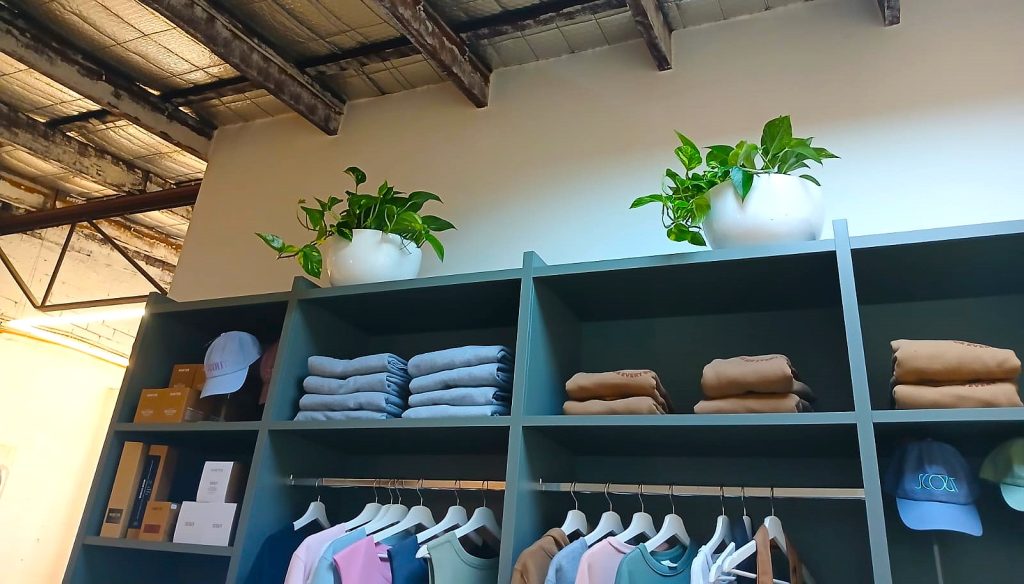
Pothos is widely used in gyms because it adapts easily to low light and doesn’t lose foliage quickly when conditions aren’t ideal. It continues to grow steadily under artificial lighting, which makes it a reliable option for interior zones.
It’s commonly placed on shelves, joinery or ledges around reception desks and along circulation paths. Because of its trailing growth, it works best when positioned where it won’t interfere with movement. Pothos is also frequently specified among small indoor plants for gym spaces where floor area is limited.
Pothos prefers free-draining soil and moderate watering. Allow the soil surface to dry slightly between watering.
ZZ Plant (Zamioculcas zamiifolia)
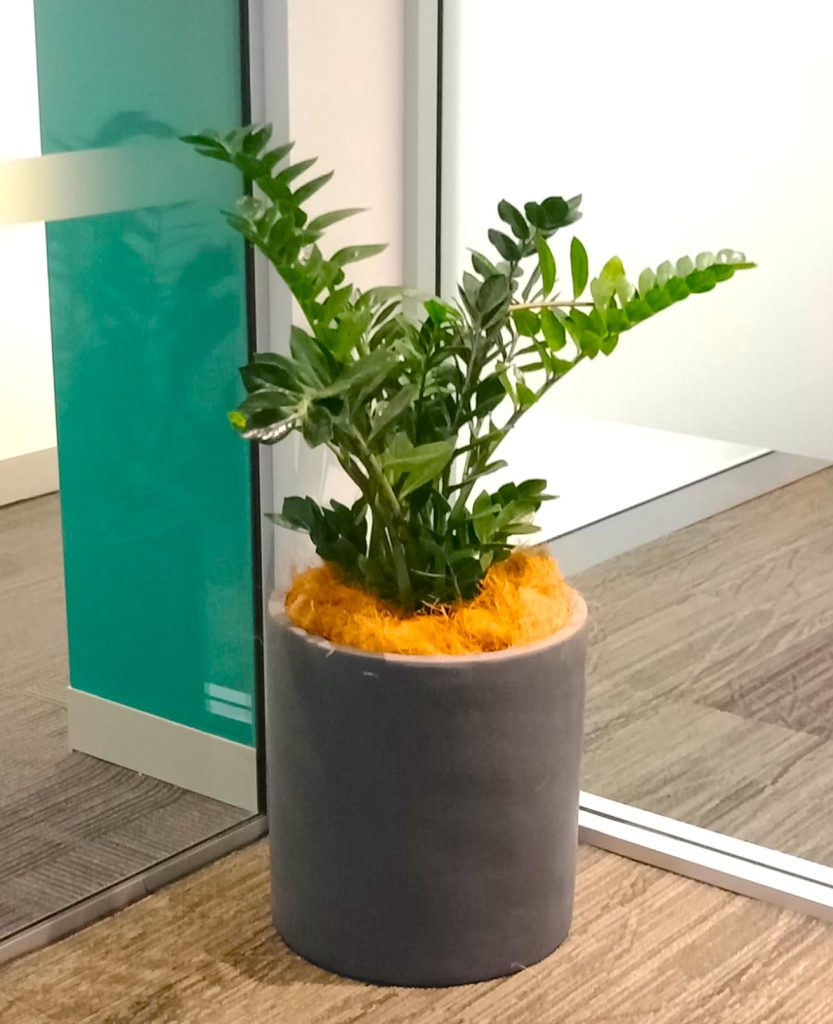
ZZ Plants are another fantastic choice. Even when placed away from windows, they don’t thin out quickly and can withstand artificial lighting well.
They’re typically used in corners, internal corridors and waiting areas where light levels are low, but visual consistency is still important. Their slow growth helps them stay contained over time.
It prefers free-draining soil and should be watered sparingly. Allow the soil to dry between watering, as excess moisture is more likely to cause issues than dryness.
Chinese Evergreen (Aglaonema)
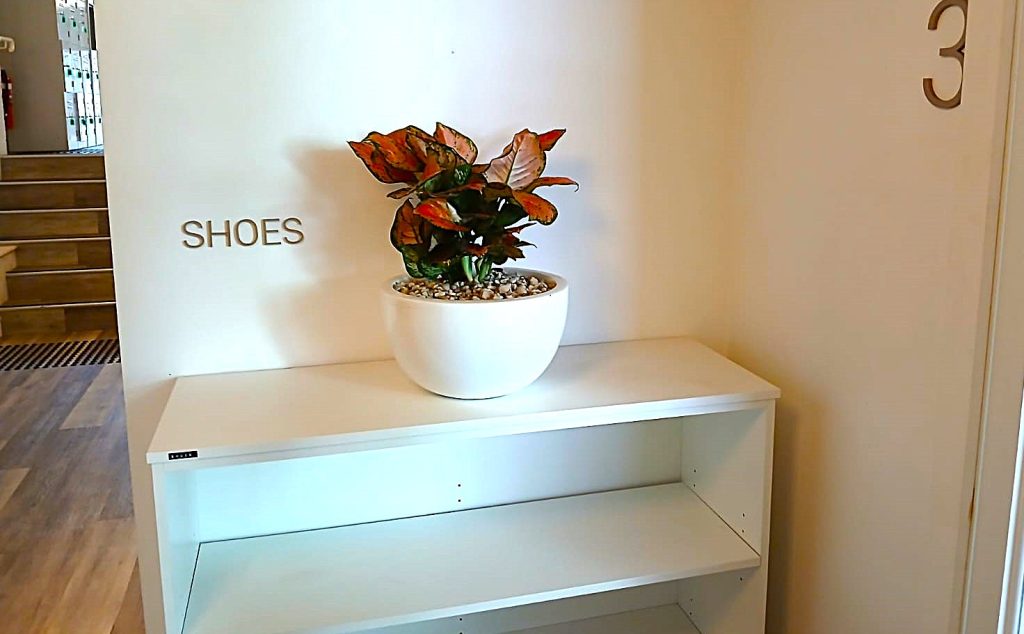
Chinese Evergreen is often chosen for gyms where a softer visual finish is needed without relying on high light levels. It maintains leaf coverage in interior spaces and doesn’t react strongly to changes in lighting throughout the day.
It’s well-suited to reception areas, quieter training rooms and secondary spaces where plants are viewed up close. Placement away from direct drafts helps maintain leaf condition.
Chinese Evergreen prefers free-draining soil and moderate watering. The soil should be allowed to dry slightly between watering.
Calming Plants
Stretching zones, cooldown areas, yoga studios and staff spaces all benefit from planting that helps take the edge off the environment. In these areas, plants are less about visual impact and more about how the space feels when people slow down.
Calming plants are often selected for gyms because they add warmth to hard finishes, introduce movement and reduce visual noise. Many of the species used in these zones also overlap with commonly specified plants for stress relief.
Bamboo Palm (Chamaedorea seifrizii)
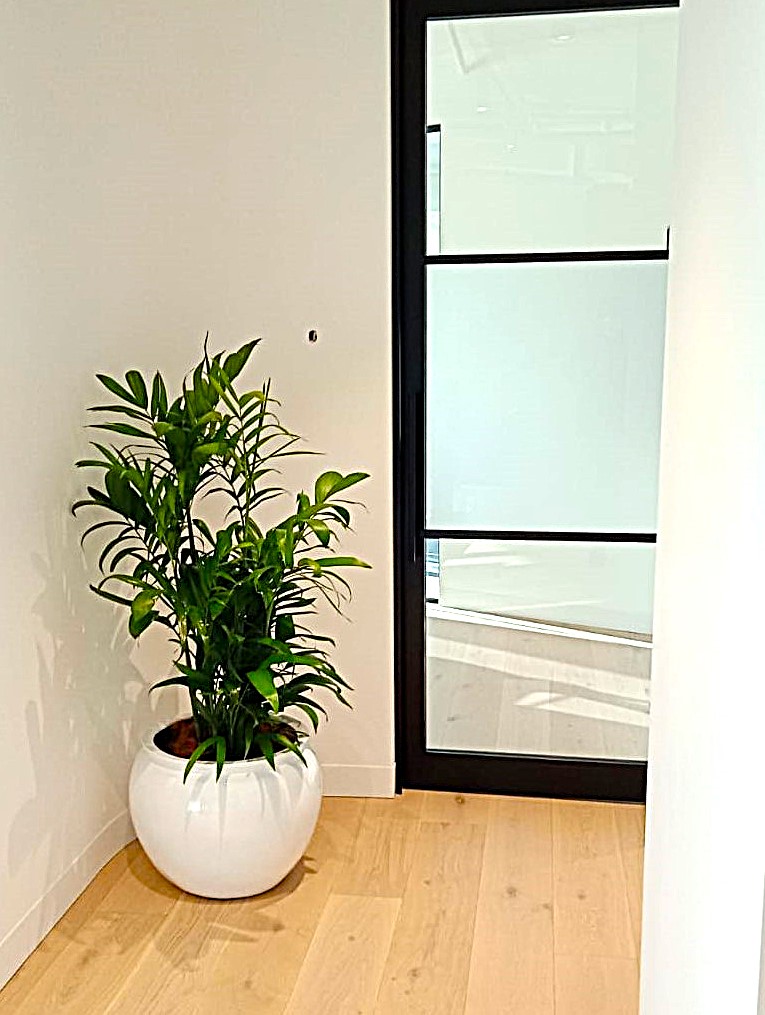
Bamboo Palms are used in gyms for their softer form and consistent growth. They introduce vertical movement without feeling rigid, which works well in recovery-focused spaces.
They’re typically placed in stretching zones, near seating or along the edges of quieter training areas where there’s some room for their fronds to move. They cope well with indoor conditions and moderate light.
Bamboo Palms prefer free-draining soil and regular watering. The soil should be kept lightly moist, without becoming waterlogged.
Peperomia (Peperomia obtusifolia)
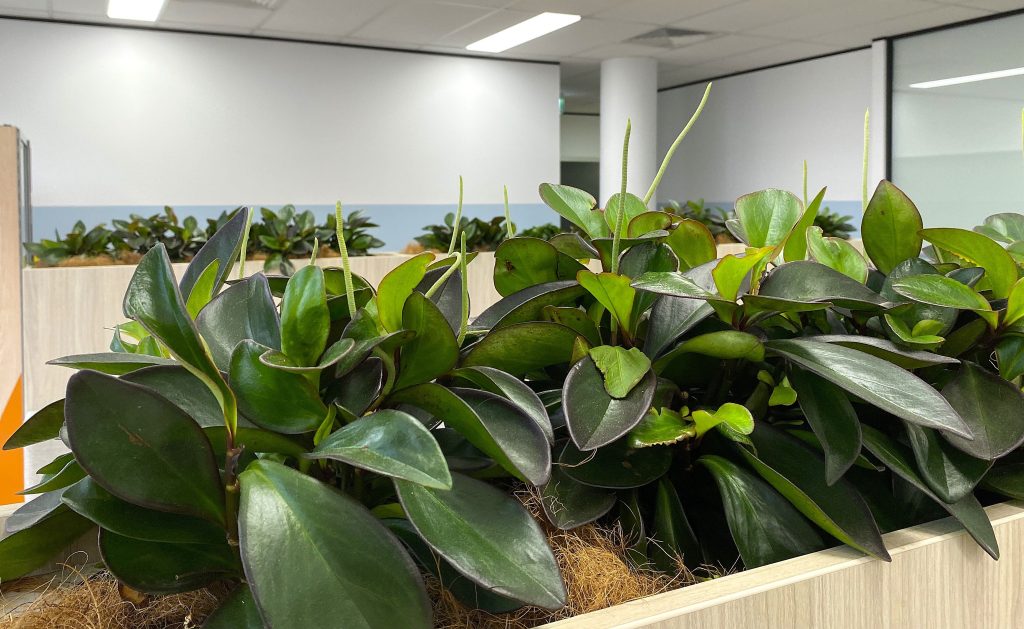
Peperomia is often used in gyms for its compact form and thick, glossy leaves, which handle indoor conditions without becoming sparse or leggy.
It’s typically placed in reception areas, recovery zones or on shelving in staff spaces where a smaller plant is needed without spreading into circulation paths. Its contained growth suits areas where floor space is limited.
Peperomia grows best in well-drained soil and does best with light to moderate watering. Allow the soil to dry slightly between waterings.
Kentia Palm (Howea forsteriana)
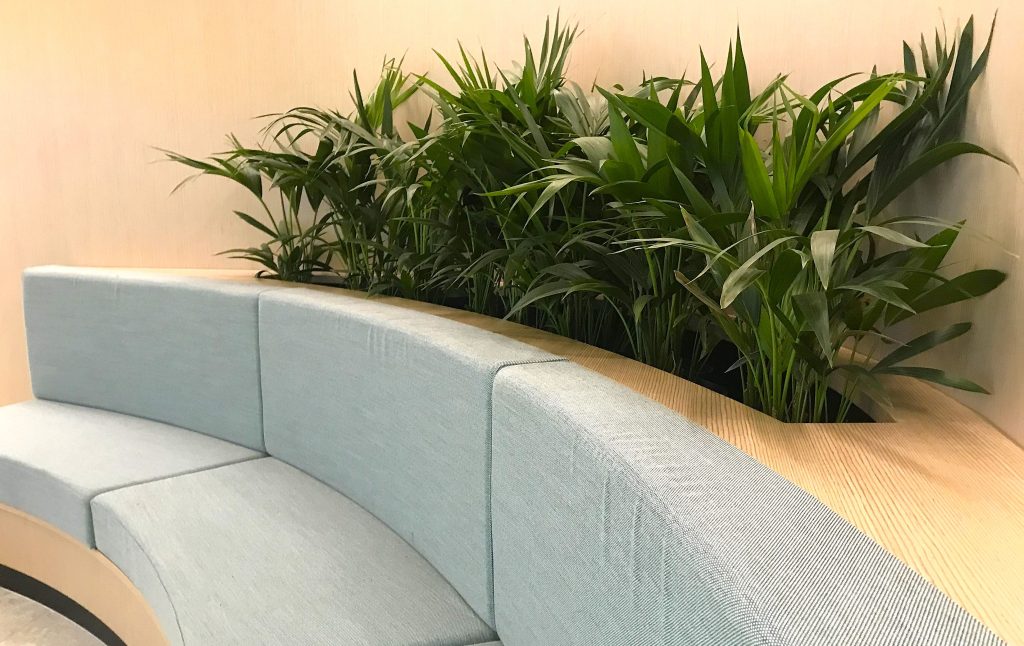
Kentia Palms are commonly used in gyms where a calm, considered look is needed without introducing delicate plants. They hold their form well and adapt to indoor environments over time.
They’re often placed near studio entrances, in open recovery areas or as standalone feature plants where space allows. Their slower growth makes them easier to manage in commercial settings.
Kentia palms favour free-draining soil and moderate watering. Let the top layer of soil dry slightly between watering.
Plants for Humid Areas
In humid areas like changing rooms, showers and group fitness spaces where heat builds up quickly, plants that prefer drier air tend to struggle, even if everything else about the environment seems suitable.
Plants that naturally tolerate higher moisture levels are a better fit here. They’re less likely to soften, drop leaves or look tired over time, which makes them easier to manage in gym settings where humidity fluctuates throughout the day.
Philodendron Cordatum (Heartleaf Philodendron)
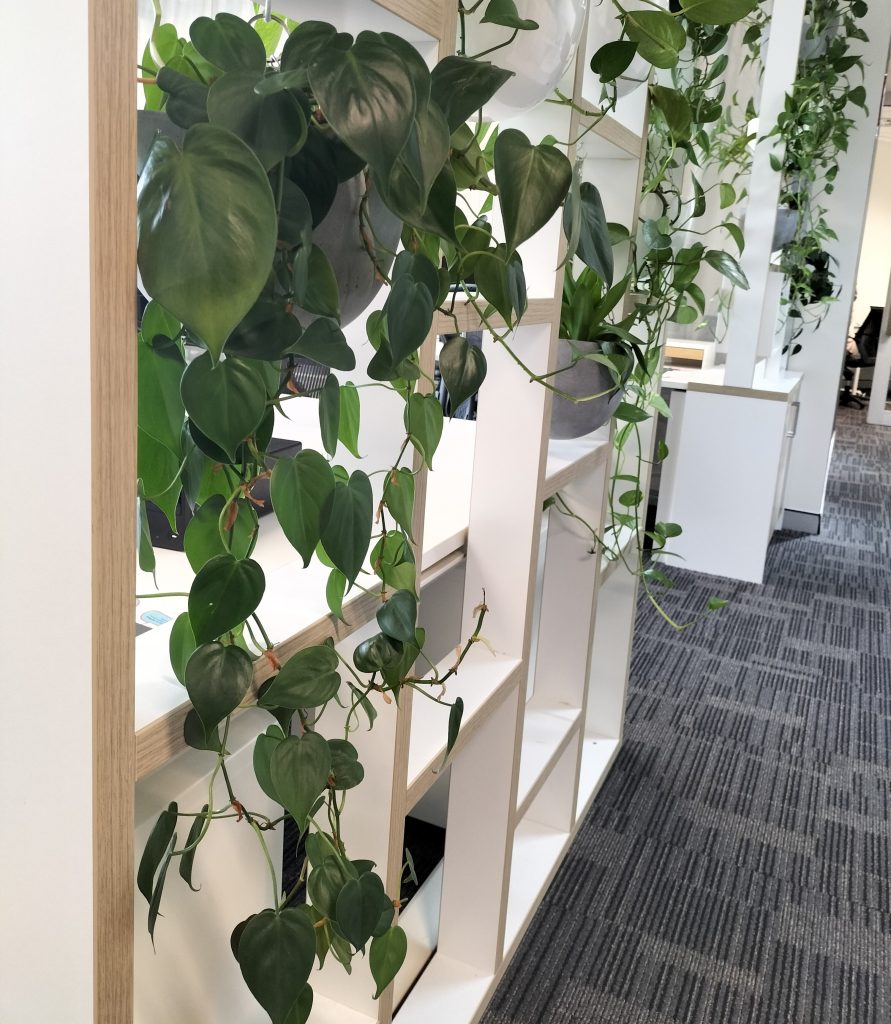
Unlike more delicate foliage plants, Philodendron Cordatum doesn’t rely on constantly moist air to stay healthy, which makes it easier to manage in changing rooms and recovery areas.
Its trailing stems are usually positioned above head height, on shelving or in wall-mounted planters, where they can soften hard finishes without interfering with circulation. It’s particularly useful in perimeter zones that experience moisture but still receive artificial lighting.
Philodendron Cordatum grows best in well-drained soil and does best with moderate watering. Allow the top layer to dry slightly between waterings, as it tolerates brief dryness better than excess moisture.
Spathiphyllum ‘Sensation’ (Large Peace Lily)
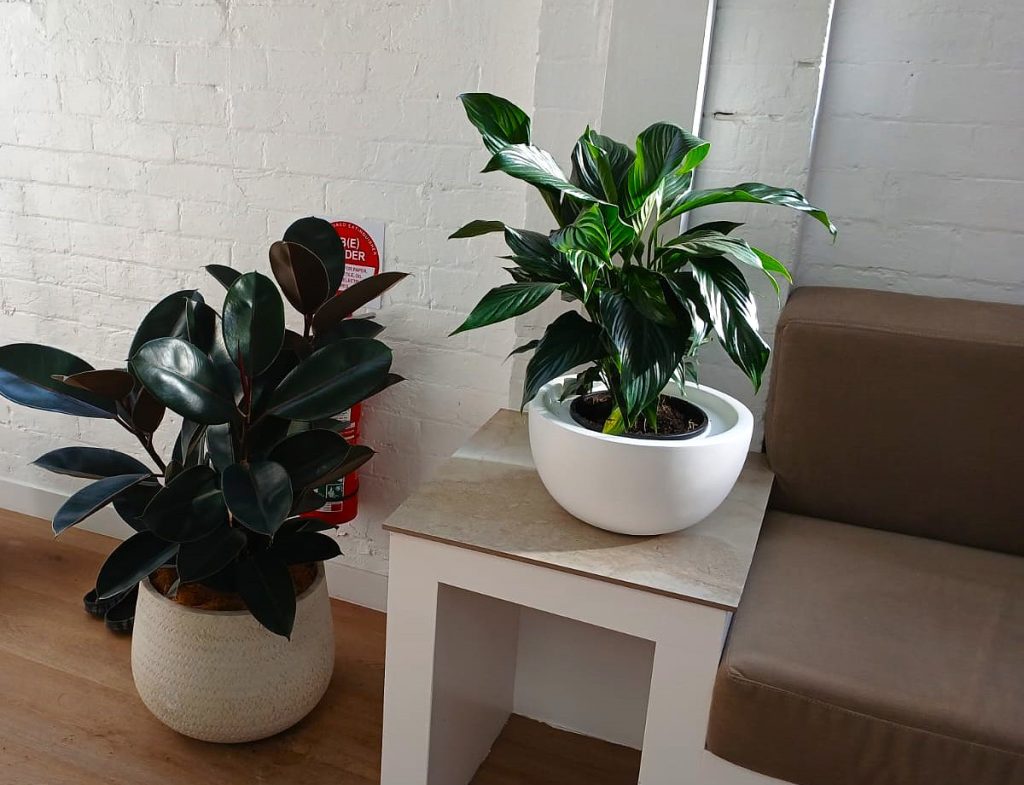
For areas with sustained humidity, such as changing rooms and recovery zones, Spathiphyllum ‘Sensation’ provides scale as well as moisture tolerance. Its broad, upright leaves hold their structure over time, making it suitable for larger spaces that need a defined planting element.
It’s typically placed near locker areas or besides seating where there’s adequate clearance for its mature height and leaf spread.
The Sensation plant grows best in well-drained soil and does best with consistent watering. The soil should remain lightly moist without becoming saturated.
Plant Dividers
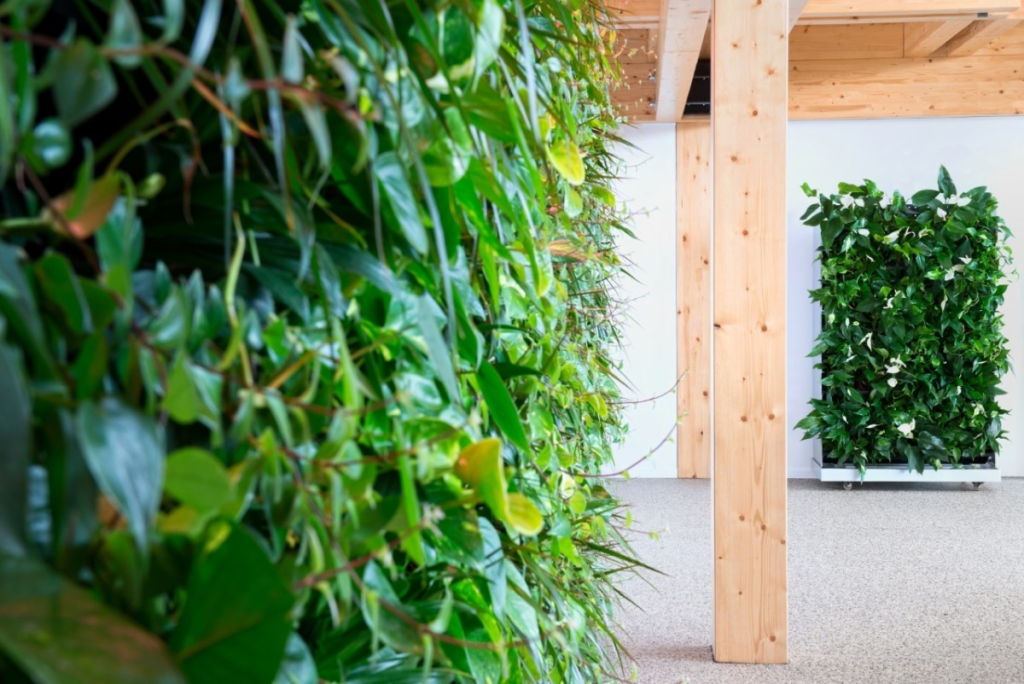
In open-plan gyms, plants are often used to do more than just fill space. Taller species can help break up large rooms, guide movement and separate training zones without introducing solid partitions.
Plant dividers work best when the species chosen has a predictable growth habit and enough visual weight to define an area. In some spaces, this is taken further with feature planting such as a garden wall art installation, particularly where designers want greenery to act as a focal point as well as a divider.
Dracaena Marginata (Dragon Tree)
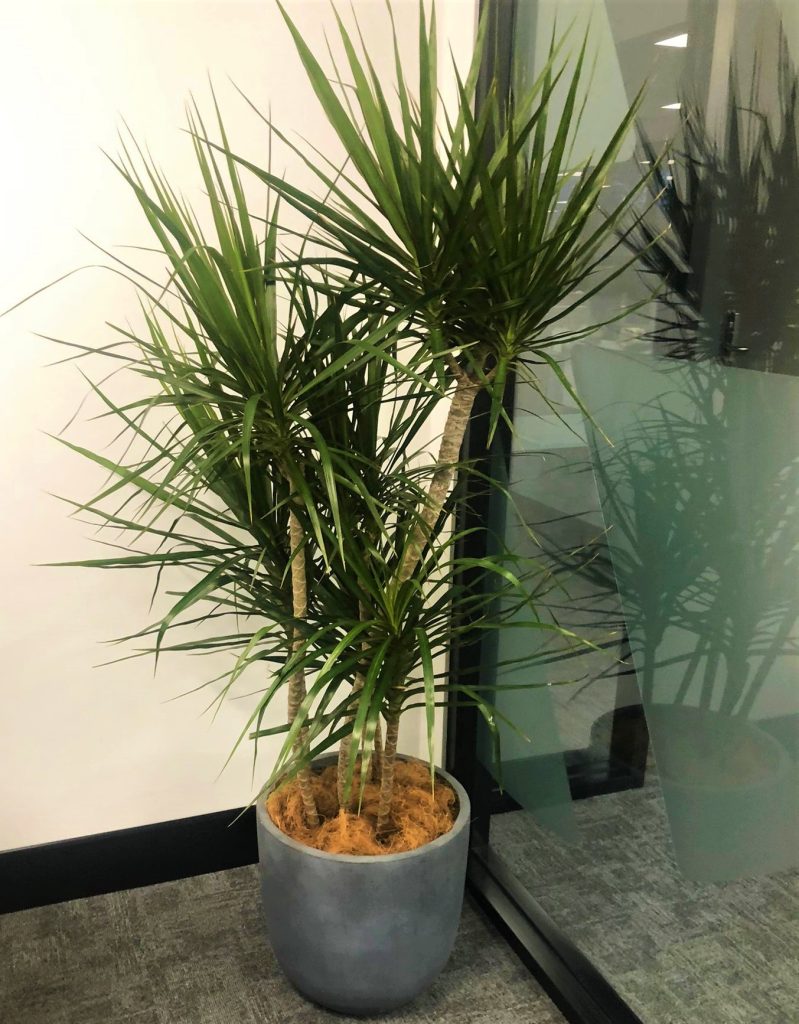
Dracaena Marginata is frequently used as a plant divider because it grows upright and stays relatively narrow. Its height helps define zones without taking up too much floor space.
It’s commonly positioned between cardio and strength areas, along the edges of open training floors or near walkways where a clear boundary is needed. Because it doesn’t spread widely, it’s easier to keep it out of circulation paths.
Dracaena prefers free-draining soil and moderate watering. Allow the soil to dry slightly between watering.
Monstera Deliciosa
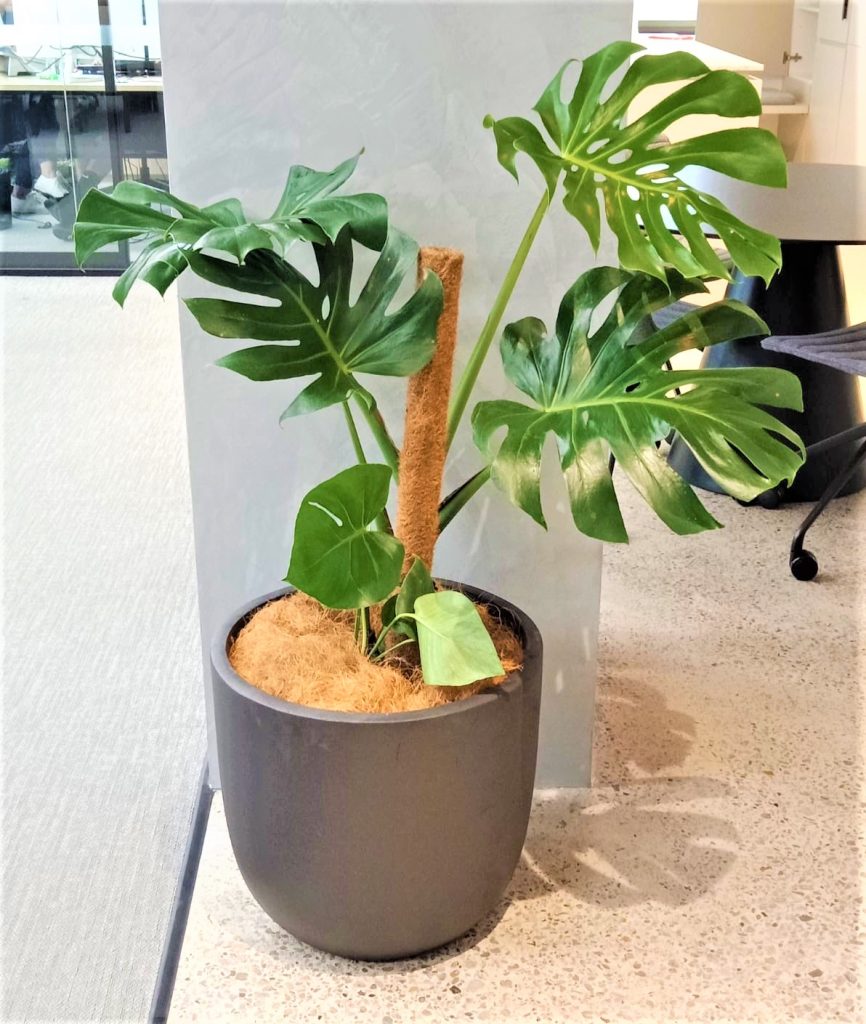
Monstera is used in gyms where a more substantial visual barrier is needed. Its large leaves create an immediate presence and work well in spaces with enough room to accommodate its spread.
It’s typically placed near lounge areas, recovery zones or along the perimeter of open studios rather than in narrow walkways. Indirect light suits it best, especially in larger interiors.
Monstera prefers well-drained soil and regular watering. Let the top layer of soil dry before watering again.
Golden Cane Palm (Dypsis lutescens)
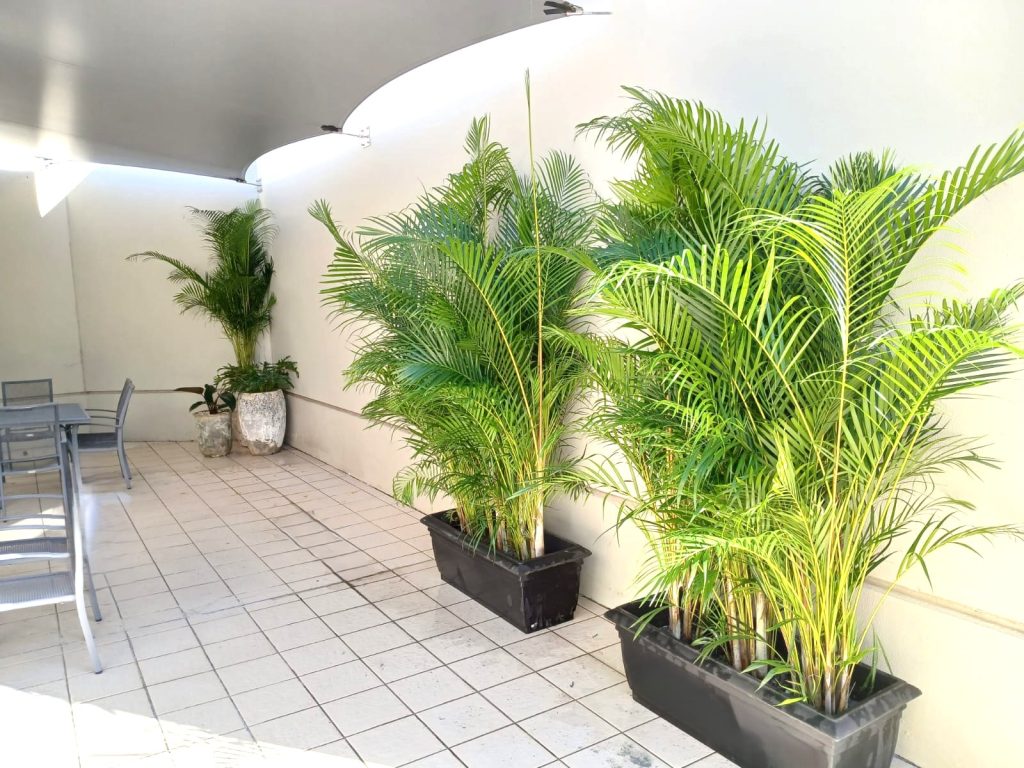
Golden Cane Palms are used in gyms where a softer visual barrier is needed without enclosing the space. Their clustered stems and arching fronds create light screening while maintaining visibility across training zones.
They’re typically positioned between functional areas in open-plan gyms, particularly where ceiling height allows for upward growth. Adequate clearance from heavy traffic helps prevent front damage over time.
Golden Cane Palms grow best in free-draining soil and do best with consistent watering. The soil should remain lightly moist without becoming waterlogged.
The Plant Man Keeps Gyms and Fitness Centres Fresh with Beautiful Greenery, No Sweat!
In gyms, planting needs to work around existing layouts, equipment placement and daily operations. Whether greenery is introduced during a fit-out or added to an established space, plant sizing and placement need to account for circulation paths, sightlines and cleaning routines.
The Plant Man works with designers and facilities teams to plan plant placement in a way that suits how the space is used. This may include indoor plant installations, planter boxes and larger installations such as vertical gardens, depending on layout, light levels and access.
We consistently rotate and replace plants regularly in high-wear areas. You need not worry about maintenance because we’ve got everything covered.