Employees in open-plan offices often struggle with privacy. Conversations carry across the room, client calls become easy to overhear, and meeting areas rarely feel as separate as intended. The challenge is even greater in shared offices and commercial spaces where adding walls or making structural changes isn’t practical.
Office managers looking at how to create privacy in an open-plan office may consider soundproofing options, but complete sound isolation isn’t always necessary. In many workplaces, the goal is to reduce distractions, limit how far conversations travel and create a stronger sense of separation between teams and work areas.
Plants can contribute to all three. While they won’t replace acoustic booths or specialist soundproofing systems, they can soften reflected noise and make open-plan spaces feel more private and comfortable to work in.
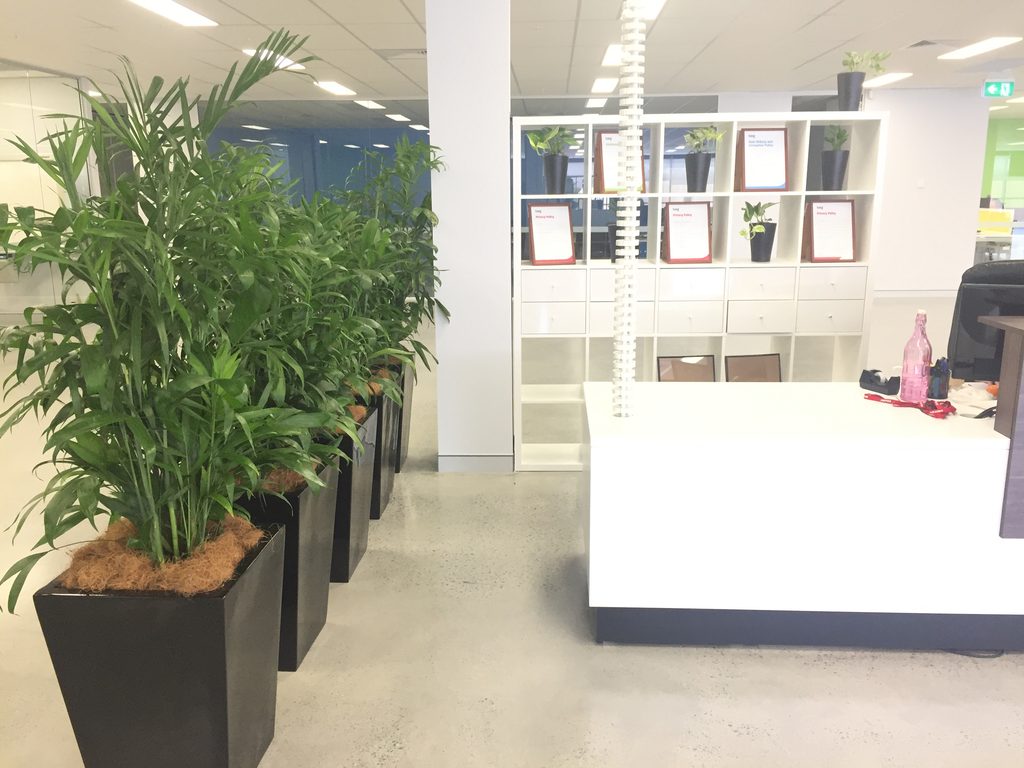
Why plants actually absorb sound (the bit no one explains)
Many workplaces are full of glass, plasterboard, hard flooring and large workstations. Sound reflects off these surfaces and carries further than people expect, particularly in busy areas.
Adding plants changes how sound moves through space. Dense foliage breaks up reflections, while layers of leaves, stems and branches create obstacles that conversations must travel around. Larger plant groupings have a greater effect than isolated plants because they cover more area and create a thicker barrier between people and work zones. The material surrounding plant roots inside planters and living walls also absorbs a small amount of sound.
Research has found that tropical indoor plants have measurable sound absorption properties, particularly when used in larger numbers and across wider areas.
You’ll notice the difference most in the frequencies associated with everyday speech. Offices with substantial planting often feel quieter because there is less echo and fewer reflected conversations moving through the space.
Plants won’t create complete acoustic privacy. Recording studios, legal consultation rooms and highly confidential meeting spaces still require specialist acoustic treatments. For open-plan workplaces, however, greenery can make a noticeable difference without changing the building itself.
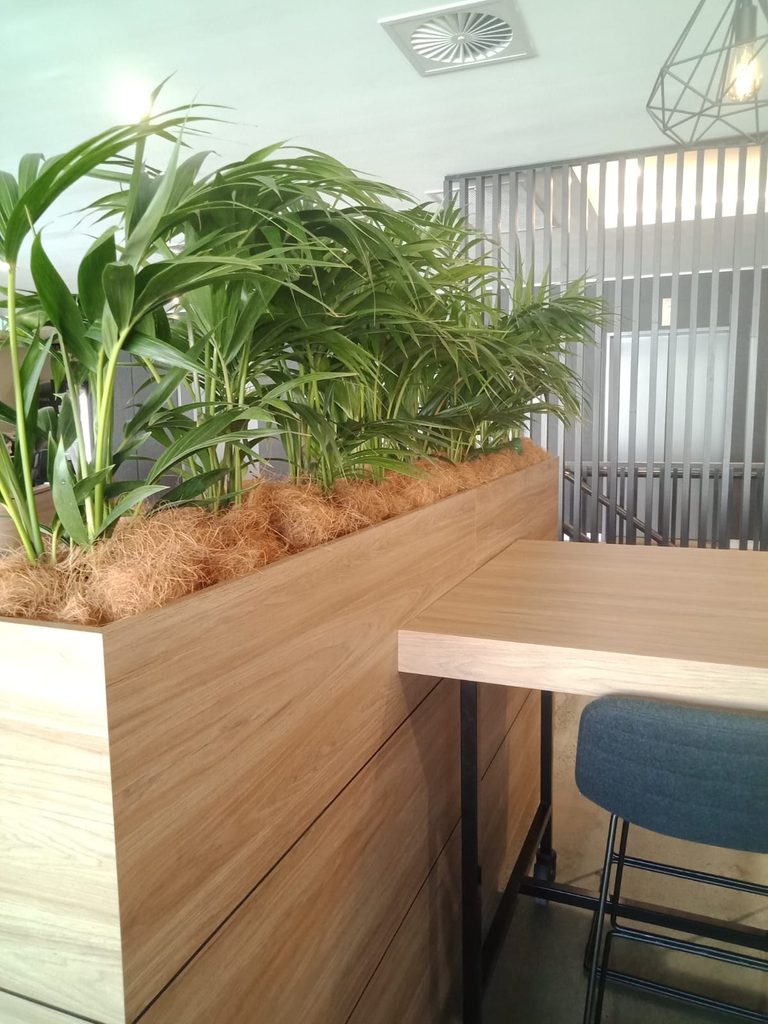
The best plants for acoustic privacy in open-plan offices
For acoustic privacy, foliage density matters more than almost anything else. Large leaves, layered growth and full canopies create more opportunities to break up sound and sightlines across an office.
A combination of tall, mid-height and lower-growing plants usually produces the strongest result.
| Species | Sound Absorption | Care Difficulty | Indoor Height | Best Use |
|---|---|---|---|---|
| Kentia Palm | High, dense foliage through multiple levels | Low | Up to 3 m | Screening between workstations and open areas |
| Rubber Plant | High, broad leaves create substantial coverage | Low to Medium | 1.5–2.5 m | Meeting areas, corners and privacy zones |
| Peace Lily | Medium, compact foliage adds visual screening | Low | 60 cm–1.2 m | Desk clusters, meeting rooms and breakout spaces |
Over the years, we’ve found that for privacy dense, leafy plants consistently outperform sparse or highly architectural species. The difference is more noticeable when plants are grouped together instead of spread individually throughout an office.
Large-scale installations such as indoor vertical garden walls take this principle even further by covering a greater surface area with living greenery. If you’re exploring options for a living wall, our guide to choosing plants for a living wall covers suitable species in more detail.
Three plant-led privacy solutions for any office
Living walls for shared-wall noise

Shared walls are often a major source of disruption in commercial buildings. Because sound can easily vibrate through thin structures, conversations and daily office activities from neighbouring spaces often bleed through, creating unwanted noise and privacy concerns.
Living walls place a substantial layer of foliage and growing medium against the wall surface. For offices exploring how to soundproof an office for privacy, indoor vertical garden walls can reduce reflected noise without major building work.
The strongest results come from mixing upright plants, mid-height fillers and trailing species across the wall. Different leaf shapes and textures create a more varied surface, which improves sound diffusion.
Planter box dividers for desk-level zoning

In many offices, noise travels between desks long before it becomes a room-wide problem.
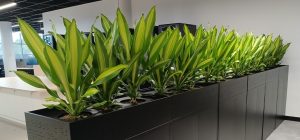
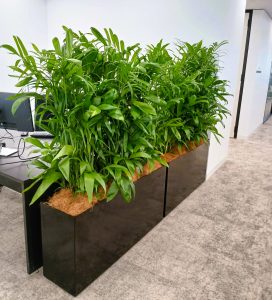
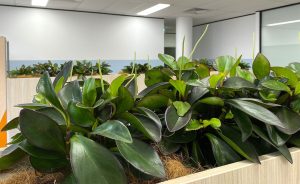
Rows of office planter boxes create a physical and visual buffer between workstation banks. Staff gain a clearer sense of personal space, and conversations feel less exposed.
Another advantage is flexibility. Planter boxes are easy to move with them, making it easy to adjust privacy zones without construction work or permanent partitions.
Strategic feature placement for meeting zones and entryways
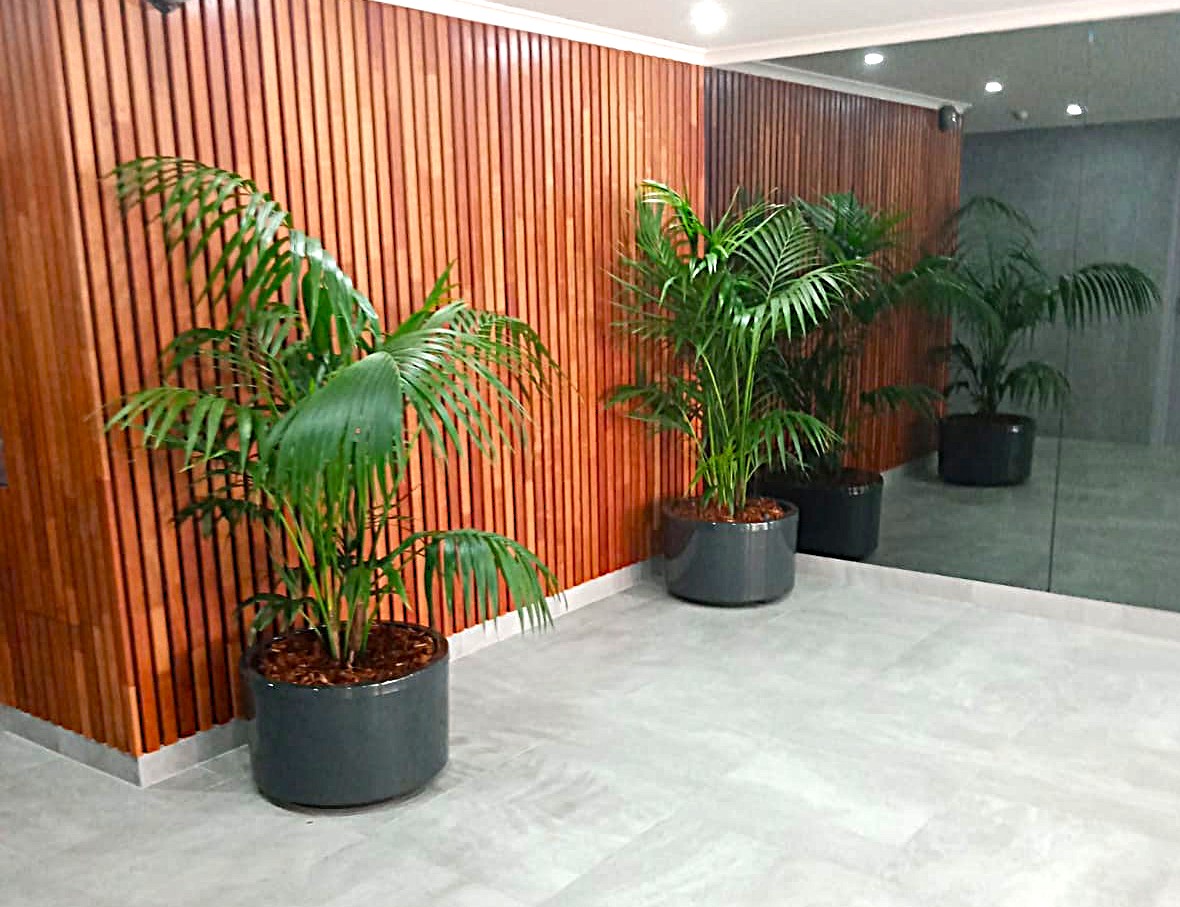
Meeting areas and breakout spaces often collect sound. Hard flooring, glazing and large open spaces allow conversations to travel further than intended.
Larger feature plants placed near corners, glass partitions and room entrances break up those reflection paths. The effect is subtle, though many offices notice that spaces feel calmer and less echo-prone once substantial planting is introduced.
Living Art frames bring planting into meeting rooms, reception areas and smaller office zones where floor space is already in high demand.
The Plant Man suggests plant placements for privacy around client waiting areas, between work spaces and breakout areas and to shield doorway entrances to restrooms.
How to soundproof an office for privacy – plants vs. traditional soundproofing
Some workplaces require complete confidentiality. Legal firms, financial advisers and consulting businesses may still need acoustic panels, private meeting rooms or dedicated booths. Other offices simply want fewer distractions, better screening between teams and a quieter atmosphere throughout the day.
| Solution | Cost | Install Time | Flexibility | Side Benefits |
|---|---|---|---|---|
| Indoor plants and planters | Low to Medium | Days | High | Visual privacy, wellbeing and workplace presentation |
| Living wall / vertical garden | Medium | Days to one week | Medium | Strong visual impact and biophilic design benefits |
| Acoustic wall panels | Medium | Days | Low | Targeted acoustic performance |
| Soundproof booths and pods | High | Days to weeks | Medium | High speech privacy |
| Full fit-out (walls and doors) | Very High | Weeks to months | Very Low | Permanent acoustic separation |
Many spaces combine traditional soundproofing with greenery. Plants invite fresh air, not to mention them being pleasant on the eyes. Meanwhile acoustic walls, layered flooring, and other installations that dampen noise are time-tested. Smartly combining the two approaches can greatly reduce unnecessary noise pollution in any office.
Make your office feel quieter this quarter
Most offices don’t need a renovation to feel quieter. Screening plants, planter boxes and living walls can reduce distractions, create separation between teams and make an open-plan office feel more comfortable to work in.
Want to know how to create privacy in an open-plan office through the power of plants? Our team can review your floor plan and recommend suitable layouts, species and office plant hire services for your workspace.