4 Best Pet-Friendly Indoor Plants for Offices
More Sydney workplaces are welcoming dogs and other pets into the office, which makes plant selection an important part of creating a safe shared space. The pet-friendly indoor plants below are verified as non-toxic to both cats and dogs by the ASPCA Animal Poison Control Centre and perform well in commercial offices with air-conditioning, indirect light and busy foot traffic.
At The Plant Man, we supply, install and maintain plants for commercial spaces through our indoor plant hire services, helping Sydney businesses create greener offices without compromising on practical considerations like pet safety.
Why Pet Safety Belongs in Office Plant Selection
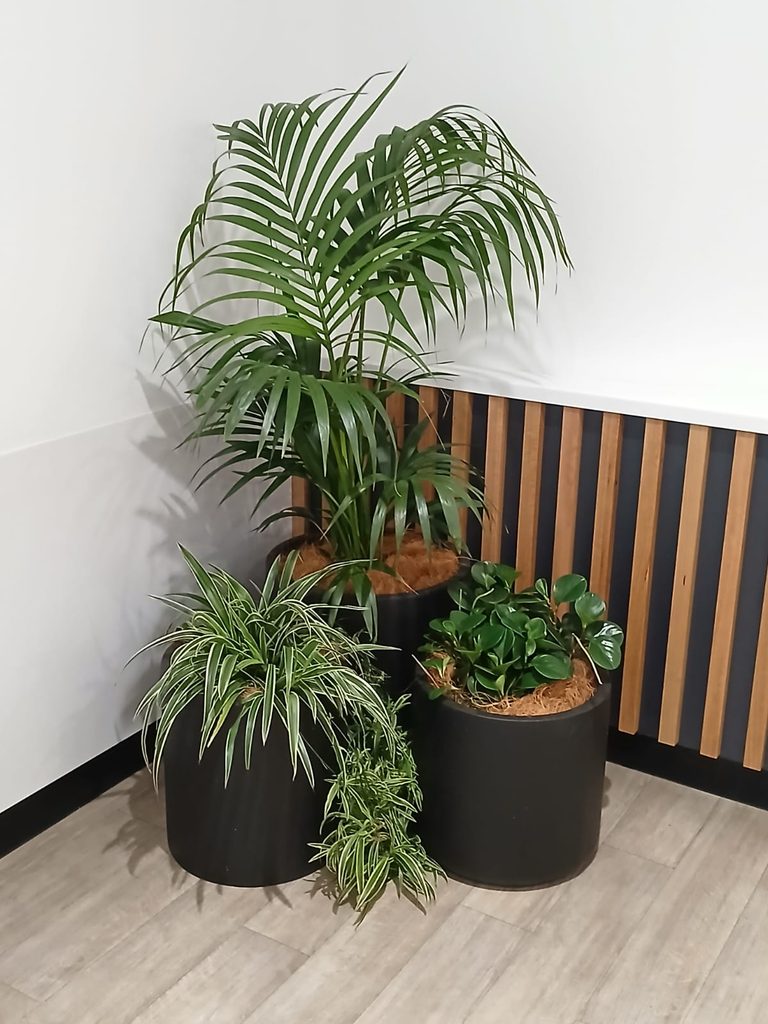
Pet-friendly workplaces are becoming more common, but many plants traditionally used in office fit-outs are still unsuitable. Pothos, Snake Plant, ZZ Plant and Peace Lily still appear on countless ‘best office plants’ lists, even though each is toxic to cats, dogs or both.
It’s also important to understand what ASPCA ‘non-toxic’ means. The classification confirms a plant doesn’t contain compounds known to poison cats or dogs. It doesn’t mean pets should eat the foliage. Any plant material consumed in large quantities can still cause vomiting or an upset stomach. If allergies are another consideration in your workplace, our guide to top allergy-friendly indoor plants looks at species suited to shared office spaces.
Pet safety is only one factor in the decision. A plant must also be able to withstand commercial conditions such as air conditioning, changing lighting throughout the day and going without water on weekends.
4 Pet-Safe Plants We Recommend for Sydney Offices
Every species below is listed by the ASPCA Animal Poison Control Centre as non-toxic to both cats and dogs. They can also handle the conditions found in many commercial offices. We’ve considered low-to-medium indirect light, air-conditioning, shared spaces and routine maintenance when selecting each plant. You can verify each listing through the ASPCA Animal Poison Control Centre plant database.
Kentia Palm (Howea forsteriana)

Native to Lord Howe Island, it handles air-conditioning better than many tropical palms and develops into an elegant feature that reaches around 2 to 3 metres indoors.
We often specify it where a single vertical feature is enough to soften a reception area, client lounge or quiet corner without competing with the surrounding furniture.
Calathea (Calathea spp.)
If your office needs more colour without relying on flowers, Calathea is a great place to start. The patterned foliage ranges from peacock to zebra and rattlesnake varieties, giving designers plenty of choice while keeping the overall look professional.
It prefers warmth, indirect light and consistently moist soil, so we usually recommend it for offices with regular plant care rather than occasional watering.
Spider Plant (Chlorophytum comosum)
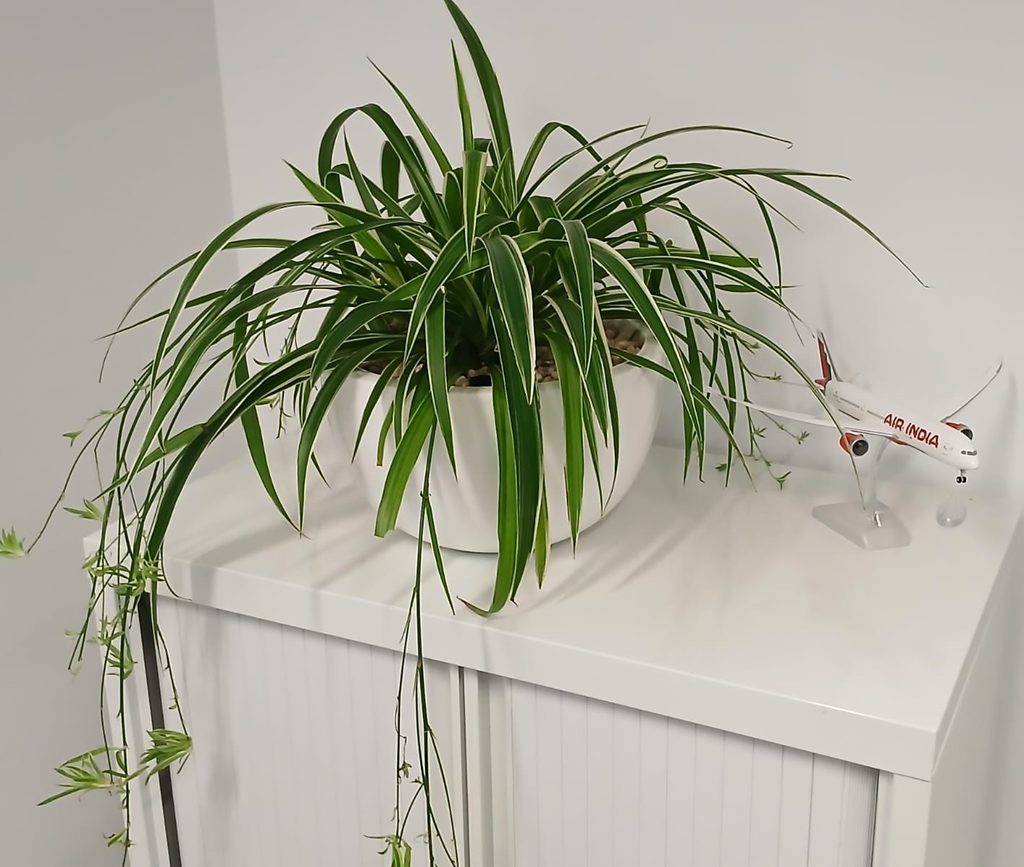
The Spider Plant handles a wide range of light conditions, grows quickly and bounces back well if watering is delayed over a long weekend or holiday period.
The ASPCA classifies Spider Plant as non-toxic to both cats and dogs, although it comes with one honest caveat. Cats are often attracted to the leaves because they contain a mild psychoactive compound. A determined cat may chew enough foliage to cause temporary vomiting or stomach upset, so hanging planters or elevated shelves are the better option.
Peperomia (Peperomia spp.)
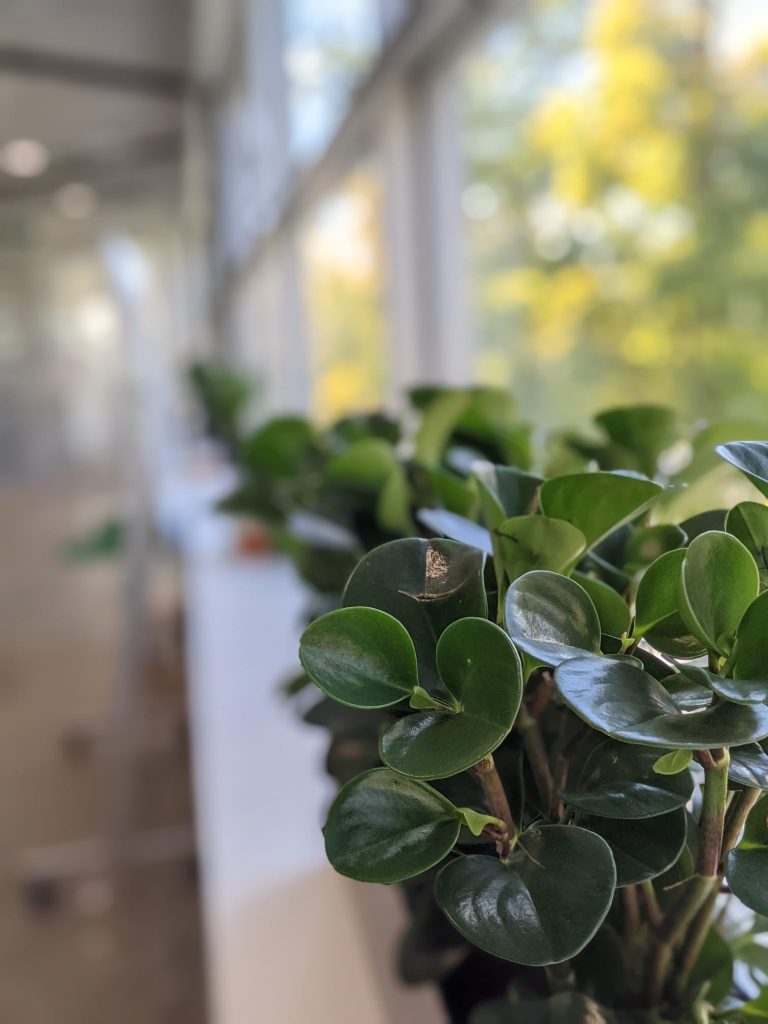
With hundreds of trailing and upright varieties available, Peperomia fits almost anywhere. Smaller plants work well on desks, shelving and meeting room joinery, while larger varieties add greenery without taking up much floor space.
It also tolerates irregular watering better than many indoor plants, making it a practical choice through office shutdowns and holiday periods. The entire Peperomia genus appears on the ASPCA’s non-toxic list for cats and dogs.
Popular Office Plants to Avoid in a Pet-Inclusive Workplace
Many of the plants used in commercial offices have excellent design credentials, but they’re not suitable where dogs or cats are welcome. If pets regularly visit your workplace, we’d avoid the following species.
- Pothos (Epipremnum aureum) contains insoluble calcium oxalate crystals. Chewing the leaves can cause intense mouth irritation, drooling, pawing at the mouth and vomiting in both cats and dogs.
- Snake Plant (Dracaena trifasciata, formerly Sansevieria trifasciata) contains saponins that can trigger nausea, vomiting and diarrhoea if eaten.
- ZZ Plant (Zamioculcas zamiifolia) also contains insoluble calcium oxalate crystals. Even a small amount can irritate the mouth and digestive tract.
- Monstera (Monstera deliciosa), often called the Swiss Cheese Plant, belongs to the same plant family as pothos and produces similar symptoms, including mouth pain, drooling and vomiting.
- Peace Lily (Spathiphyllum spp.) isn’t a true lily, but it’s still hazardous to cats and dogs because it also contains insoluble calcium oxalate crystals.
- Sago Palm (Cycas revoluta) is the standout plant to avoid. Every part of the plant is highly toxic, particularly the seeds, and ingestion can lead to severe liver damage, seizures and death without urgent veterinary treatment.
- Lucky Bamboo (Dracaena sanderiana) isn’t actually bamboo. Despite its common name, it’s another Dracaena species and is toxic to both cats and dogs.
If a Pet Ingests a Dangerous Plant at Work
- Remove the pet from the plant immediately.
- Photograph the plant or take a leaf sample if it is safe to do so.
- Contact the Australian Animal Poisons Helpline on 1300 869 738 for free, 24-hour advice.
- Go directly to an emergency vet if a known toxic plant (such as Sago Palm, Peace Lily, or Pothos) has been ingested.
- Monitor the pet for symptoms including drooling, vomiting, lethargy, pawing at the mouth, or difficulty swallowing.
How to Build a Pet-Safe Green Office
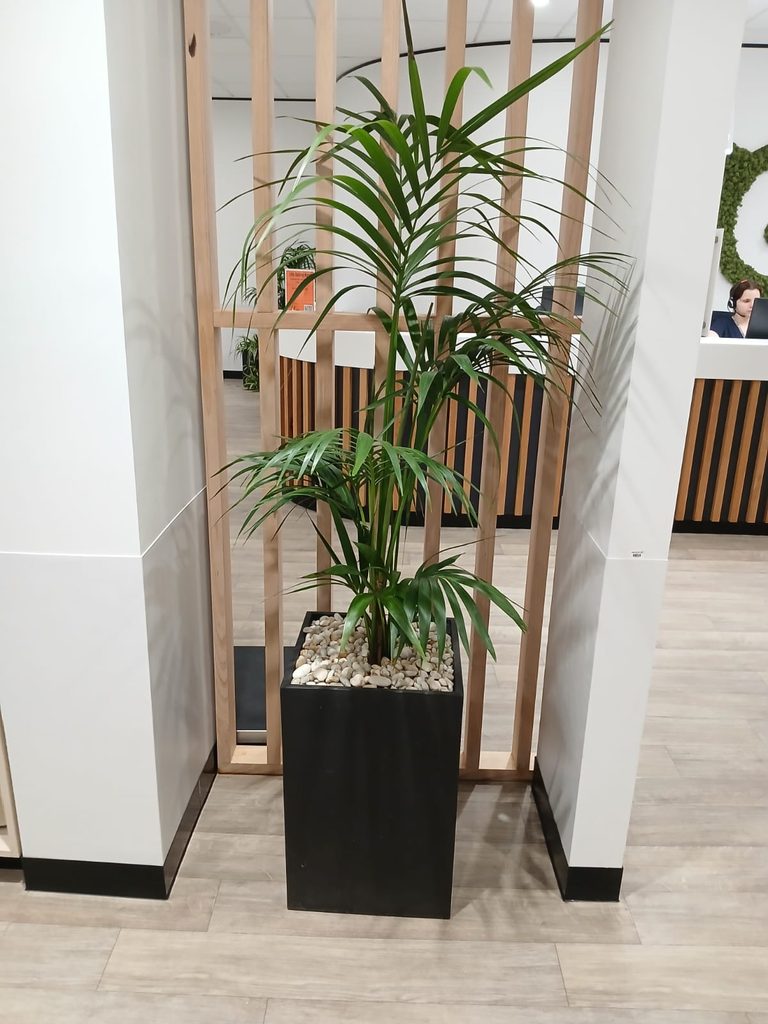
Heavier ceramic or timber planters help stabilise larger floor plants, while smaller pet-friendly office plants can be displayed on shelving or cabinets that curious cats and dogs can’t reach. Keep greenery away from food bowls and regular walking paths, and check any plants employees bring into the office against the ASPCA database before introducing them into shared spaces. Our guide to decorating offices with indoor plants offers more ideas for balancing greenery with practical layouts. We also provide ongoing plant maintenance services and select suitable plants and stable planters for every installation. You can see examples in our commercial projects gallery.
FAQs
Are pothos, snake plants, ZZ plants, monstera and peace lilies safe for pets?
No. The ASPCA lists all five as toxic to cats and dogs. Pothos, Monstera, ZZ Plant and Peace Lily contain insoluble calcium oxalate crystals, while Snake Plant contains saponins. Common symptoms include drooling, pawing at the mouth and vomiting. We recommend replacing them with one of the pet-safe alternatives above.
What does ASPCA ‘non-toxic’ actually mean?
ASPCA’s non-toxic classification means a plant doesn’t contain compounds known to cause poisoning in cats or dogs. It doesn’t mean the plant is edible. Eating enough leaves can still lead to vomiting or stomach upset, even when the species is listed as non-toxic.
Are these plants safe for dogs and cats, or just one?
Every plant we’ve recommended appears on the ASPCA’s non-toxic list for both cats and dogs. It’s worth noting that the Spider Plant is the only exception. While it’s non-toxic, some cats are attracted to the foliage and may chew enough leaves to cause temporary stomach upset.